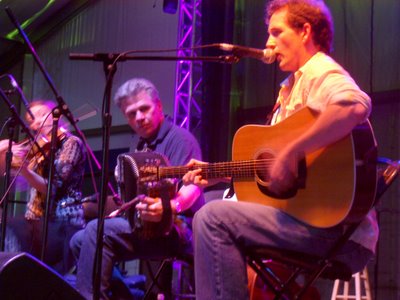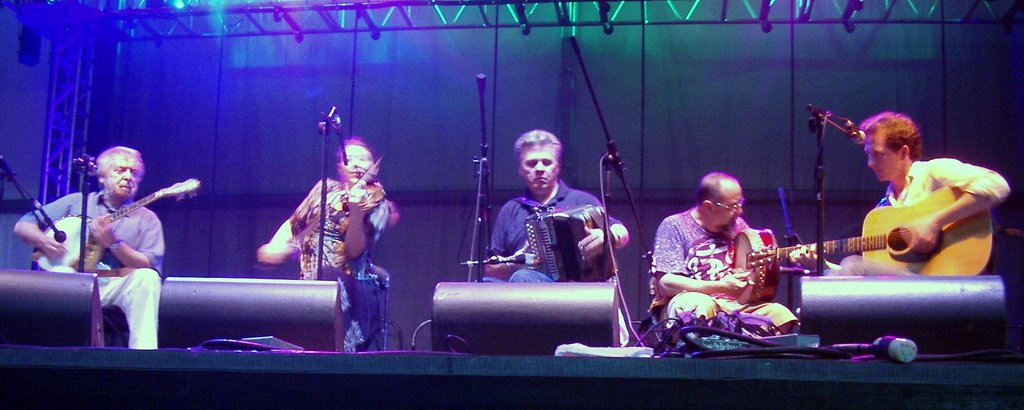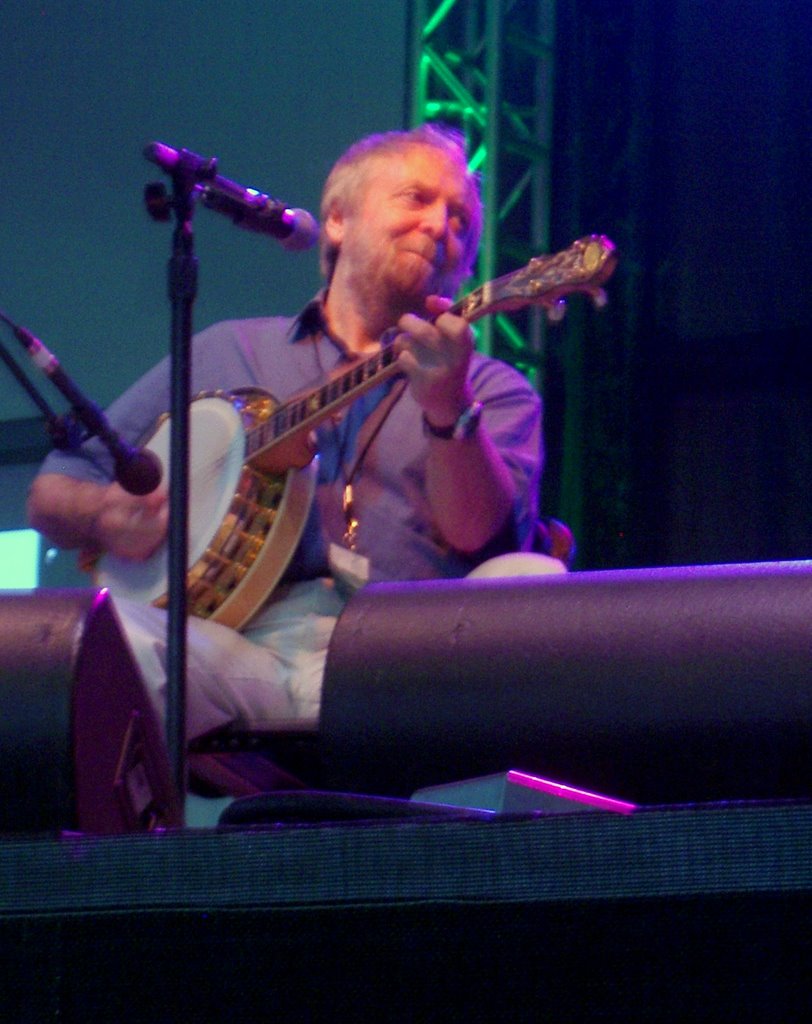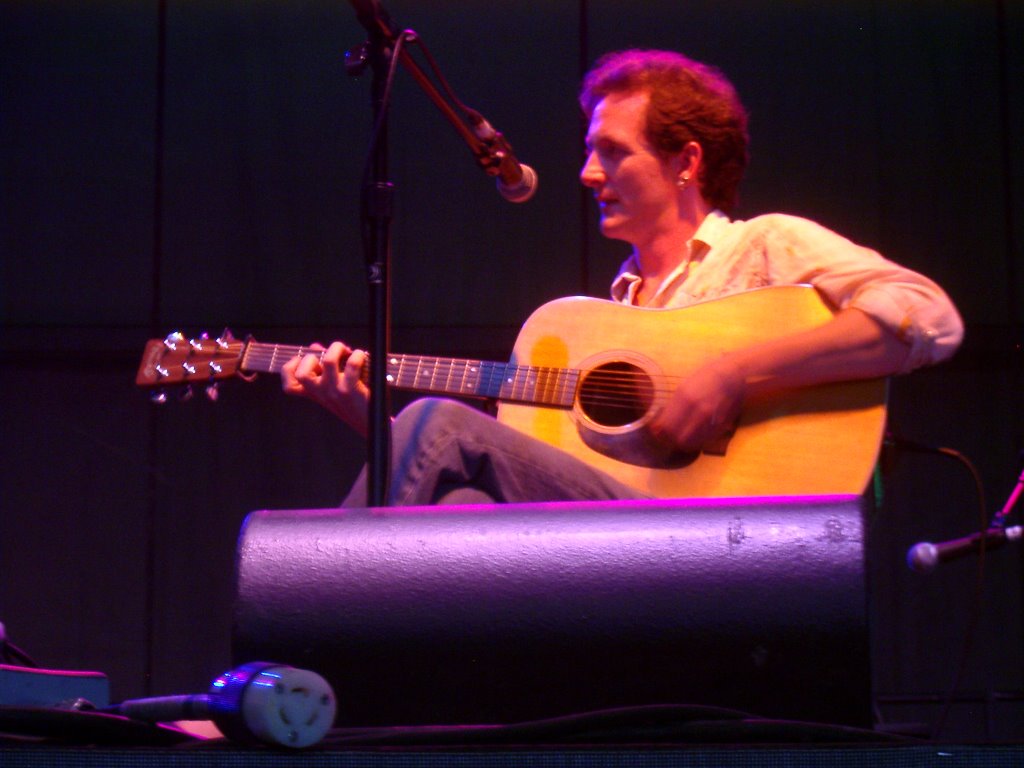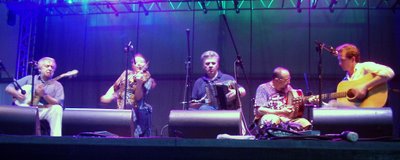
This past August I caught Mick Moloney's band Green Fields of America at the 2006 Dublin Irish Festival. The announcer noted that when the festival began 19 years ago and was held in a tennis court, there was only one band the first year: Green Fields of America. This year the festival spanned several acres and attracted 80,000+ people, plus many well-known bands, and once again Green Fields of America played.
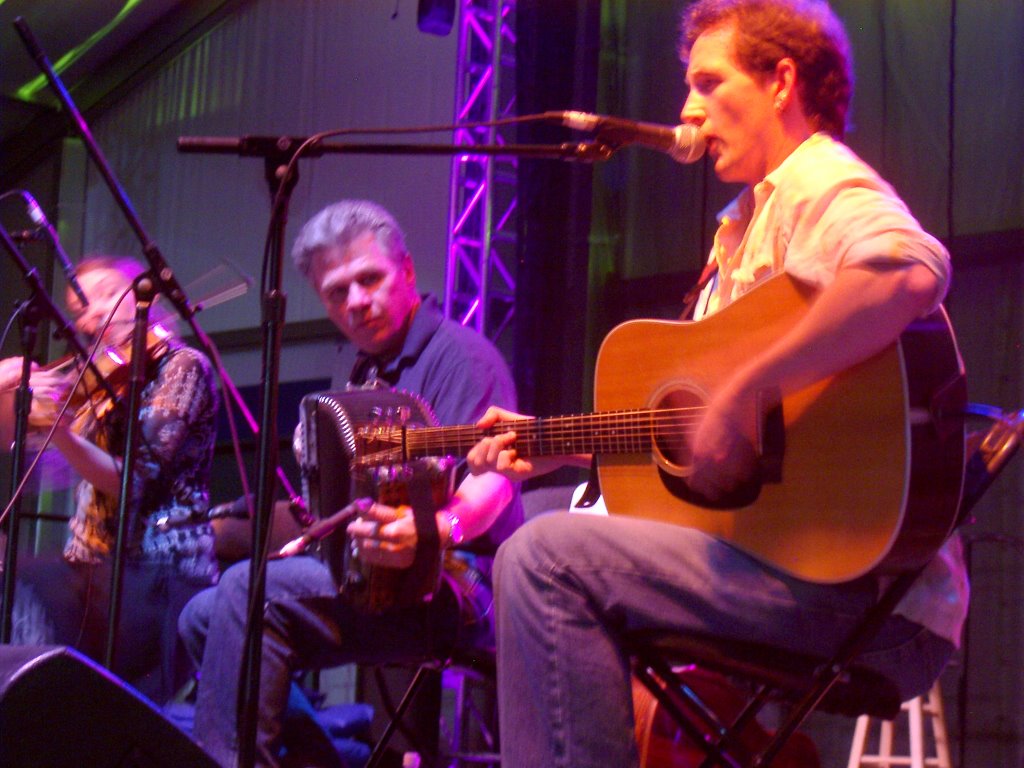
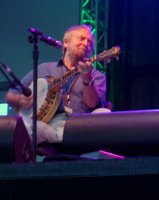 Green Fields of America is not so much an ongoing band as it is Mick Moloney and his rotating crew of Irish music all-stars. This year the band consisted of
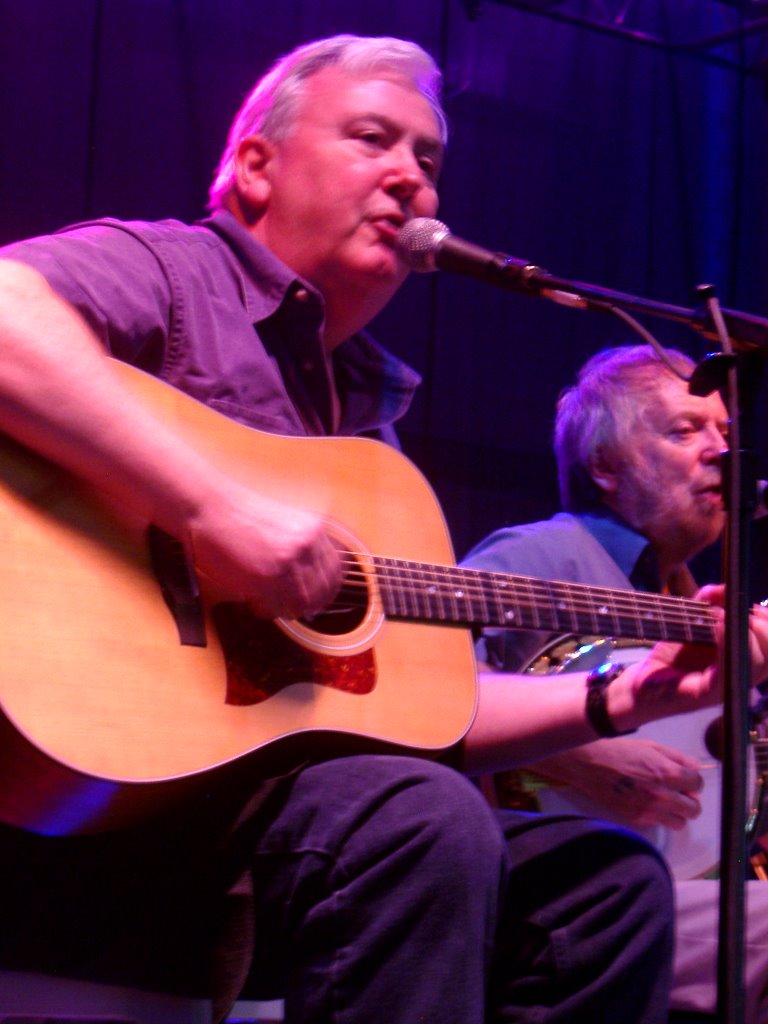
- Mick (guitar, mandolin, tenor banjo, and vocals)
- John Doyle (guitar, vocals)
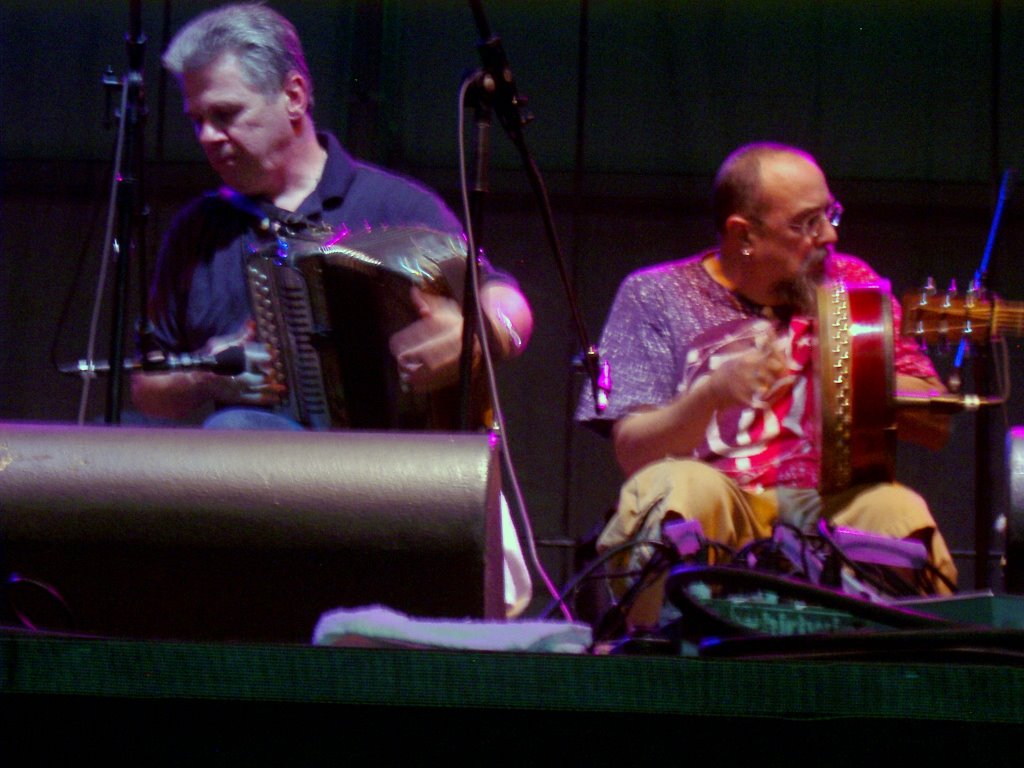
- Billy McComiskey (box)
- Robbie O'Connell (guitar, vocals)
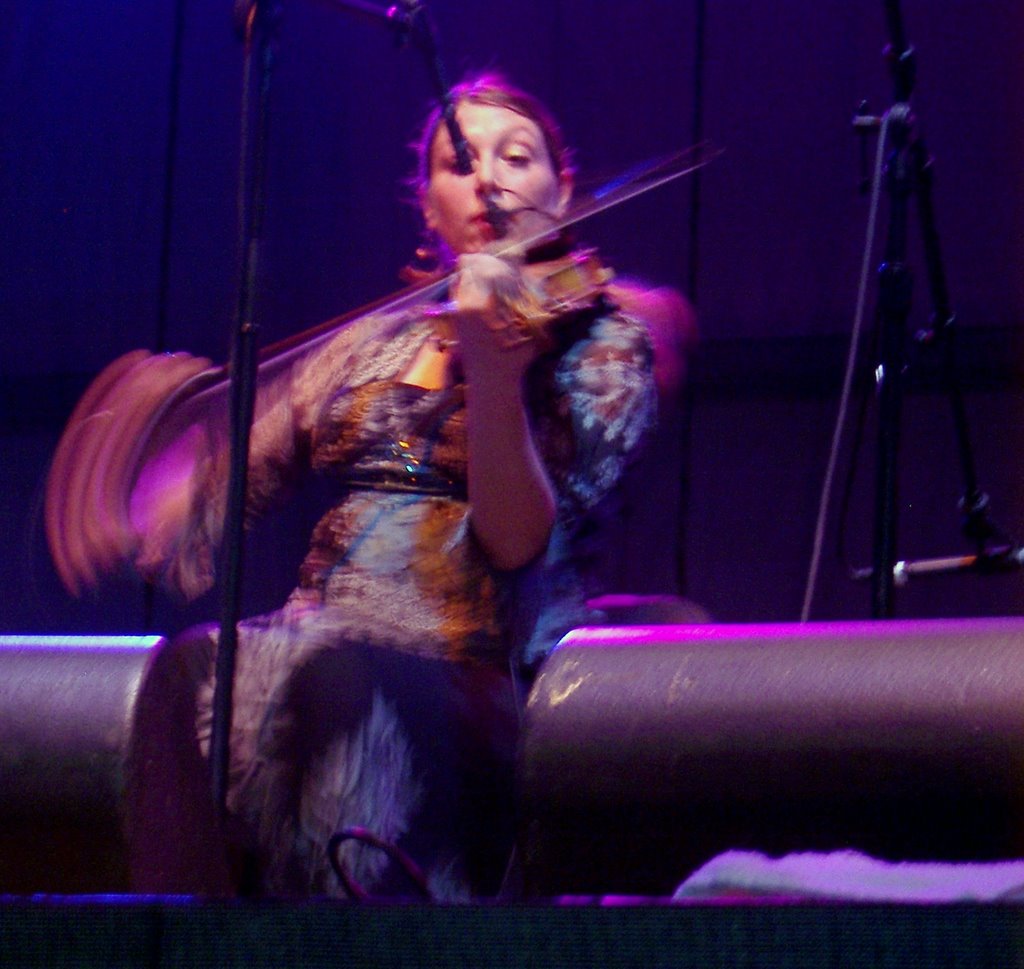
- Athena O'Lochlainn (fiddle)
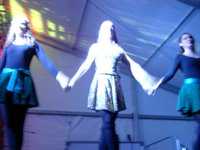 I have heard some of Mick Moloney's recorded music before; I just bought the CD which accompanies his book Far from the Shamrock Shore a couple of months ago. But while that CD, and most of the other recordings I've heard from him, lean almost entirely towards song, the Green Fields of America performance had a roughly even mix of songs and dance tunes, and featured local, live dancers for two of the sets. Mick's albums of song aren't bad at all, but in the end I decided that I like his dance tunes even more.
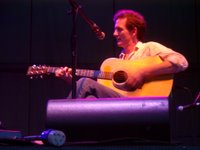 Friday's performance started late due to problems with the monitor mix, which seemed not to be resolved for the whole show; John Doyle left his chair several times during the show to have a word with the monitor mixer. The front of house mix was some better, but the guitars were way too high in the mix; they frequently drowned out the other instruments. Even at the Irish festival I sometimes wonder if the mixers realize that the guitars are frequently playing accompaniment. Sunday's show seemed to be much better mixed overall.
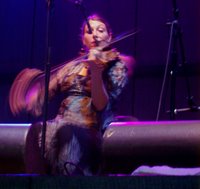 Athena O'Lochlainn was a new name to me, but as soon as she started playing it became clear that she had more than enough talent to earn a place with such distinguished company. Her fiddle playing was simply delightful, packed with lift and cheer. It was fun to watch her face as she played; she seemed to react to the sounds coming from her instrument in much the same way as the audience did. According to her personal site she has a CD, produced by John Doyle, in the works.
 Three guitarists might seem like rather a lot for an ITM group, but the performance would not have been the same without Robbie O'Connell's excellent singing. You can sample his songwriting at his web site.
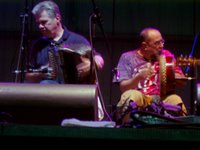 I didn't recognize Billy McComiskey
 by sight and had missed his name during the introductions, so I didn't realize who he was at first. In retrospect, I really respect the way he held back for the better part of the performance, letting other band members take the spotlight. But when it came time for him to let loose and show the audience what he can do, I realized that he was a first-rate talent. When I finally caught his name at the end of the show all of the pieces fell in place. Like John Doyle, his talent comes not just from his ability to play his instrument really, really well, but also his ability to not overwhelm the rest of the band in every number.
At the end of Friday's show, the band was joined by bodhrán builder and player Albert Alfonso, who provided rhythmic accompaniment for the last two sets.
Green Fields of America can be an elusive band. They don't tour a lot, and as far as I can tell have only one album in current release. That's a shame, because the two sets I caught at the Irish festival showed the current lineup to be a remarkably cohesive band. The music they played wasn't what I had expected, but I have no complaints at all. The band played great dance music punctuated with occasional songs, and seemed to enjoy listening to each other.
Family obligations caused me to miss many of the other performers at the Irish festival this year, but I think I caught the best show there. This was easily the best show I've seen all year.